
The Rustic Journal
What Is Véraison? The Complete Guide to Bordeaux's Most Beautiful Vineyard Season
Stories from wine country
Have you ever wandered through the vineyards of Bordeaux in late summer and noticed that the grapes are suddenly changing colour?
Have you ever wandered through the vineyards of Bordeaux in late summer and noticed that the grapes are suddenly changing colour?
One week they’re small and bright green. A few weeks later, they’re deep purple or glowing golden, and the vineyards seem to transform almost overnight.
This magical stage is called véraison, and for many winemakers, it’s one of the most exciting moments of the entire growing season.
Whether you’re passionate about wine or planning a trip to Bordeaux, understanding véraison gives you a deeper appreciation of everything that happens before a bottle reaches your table.
At Rustic Vines, we spend every day exploring the vineyards with local winemakers and visitors from around the world. During véraison, there’s a special energy in the vineyards. The vines are thriving, growers are closely monitoring each parcel, and anticipation for the upcoming harvest begins to build.
In this guide, we’ll explain what véraison is, why it matters, how climate change is influencing it, and why late July and August are some of the best times to visit Bordeaux wine country.
What Is Véraison?
Véraison is the stage in the vine’s annual cycle when grapes begin to ripen.
Until this point, grape berries remain firm, green, and high in acidity. Then, over a period of several weeks, remarkable changes begin to take place.
For red grape varieties such as Merlot, Cabernet Sauvignon, and Cabernet Franc, the berries gradually turn from green to shades of red, purple, and almost black.
For white grape varieties such as Sauvignon Blanc, Sémillon, and Muscadelle, the grapes become softer and develop their characteristic golden colour.
Inside each berry:
- Sugar levels increase.
- Natural acidity slowly decreases.
- Aromas begin to develop.
- Tannins become more refined.
- The grapes prepare for the final stage before harvest.
For winemakers, véraison signals that the countdown to harvest has officially begun.
Why Is Véraison So Important?
The quality of every Bordeaux wine begins long before harvest.
During véraison, growers carefully monitor each vineyard to understand how quickly the fruit is ripening. Every decision becomes increasingly important.
They observe:
- Sugar concentration
- Acidity
- Tannin development
- Berry size
- Water stress
- Weather forecasts
These observations help determine the ideal harvest date, ensuring grapes are picked at their optimal maturity.
Harvesting too early may result in wines that are overly acidic and lacking fruit, while harvesting too late can produce wines with excessive alcohol and reduced freshness.
Finding the perfect balance is one of the greatest skills in winemaking.
When Does Véraison Happen in Bordeaux?
In Bordeaux, véraison usually begins between late July and early August, although the exact timing varies each year depending on weather conditions and grape variety.
Merlot often starts changing colour slightly earlier than Cabernet Sauvignon because it naturally ripens sooner.
Some vineyards experience véraison over several weeks, as not every vine or grape cluster develops at exactly the same pace.
For visitors, this creates one of the most picturesque periods of the year. Walking through the vineyards, you’ll often see bunches displaying multiple colours at once, highlighting the gradual nature of the ripening process.
Why Is Véraison Happening Earlier?
One of the biggest changes observed across Bordeaux over recent decades is the increasingly early arrival of véraison.
Warmer winters, earlier springs, and more frequent heatwaves have accelerated the vine’s natural development. Budburst occurs earlier, flowering happens sooner, and now véraison often arrives days or even weeks earlier than historical averages.
According to the \International Organisation of Vine and Wine (OIV)\, changing vine phenology is one of the clearest indicators of climate change affecting vineyards worldwide.
This doesn’t automatically mean that wine quality is improving or declining. Every vintage remains unique, and the weather during August and September continues to play a decisive role.
How Bordeaux Vineyards Are Adapting
Bordeaux has always adapted to changing conditions.
Today, many estates are investing in sustainable vineyard management to help protect both their vines and the environment.
One increasingly common practice is agroforestry. Trees and hedgerows are being reintroduced around vineyards to provide natural shade, improve biodiversity, encourage beneficial insects, and help retain moisture during hot summers.
Many estates are also adopting agroecology, which focuses on healthier soils, cover crops, reduced tillage, and encouraging natural ecosystems throughout the vineyard.
These methods improve the resilience of vines while helping preserve the identity of Bordeaux’s famous terroirs.
The \Conseil Interprofessionnel du Vin de Bordeaux (CIVB)\ has made sustainability one of its major priorities, while research from \INRAE\ continues to explore new approaches to vineyard adaptation.
Why Visit Bordeaux During Véraison?
Many visitors automatically think harvest is the best time to discover Bordeaux.
Harvest is certainly exciting—but there’s something uniquely peaceful about véraison.
The vineyards are vibrant, the weather is warm, the grapes are changing colour, and the pace is slower than during harvest, allowing visitors to fully appreciate the beauty of the landscape.
This is also when local guides can explain how the vintage is developing before the grapes are picked.
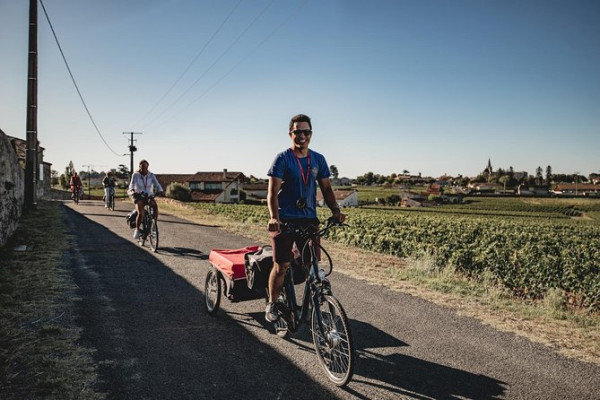
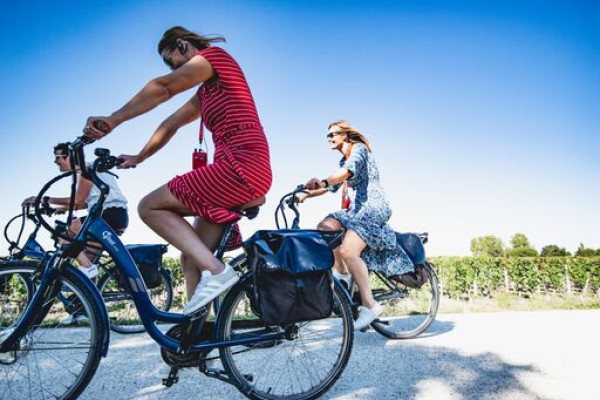
Whether you’re exploring the rolling hills of Saint-Émilion, cycling through prestigious vineyards, or tasting wines in the Médoc, véraison offers an unforgettable glimpse into the winemaking process.
Experience Véraison with Rustic Vines
At Rustic Vines, we believe the best way to understand Bordeaux wine is to experience it where it’s made.
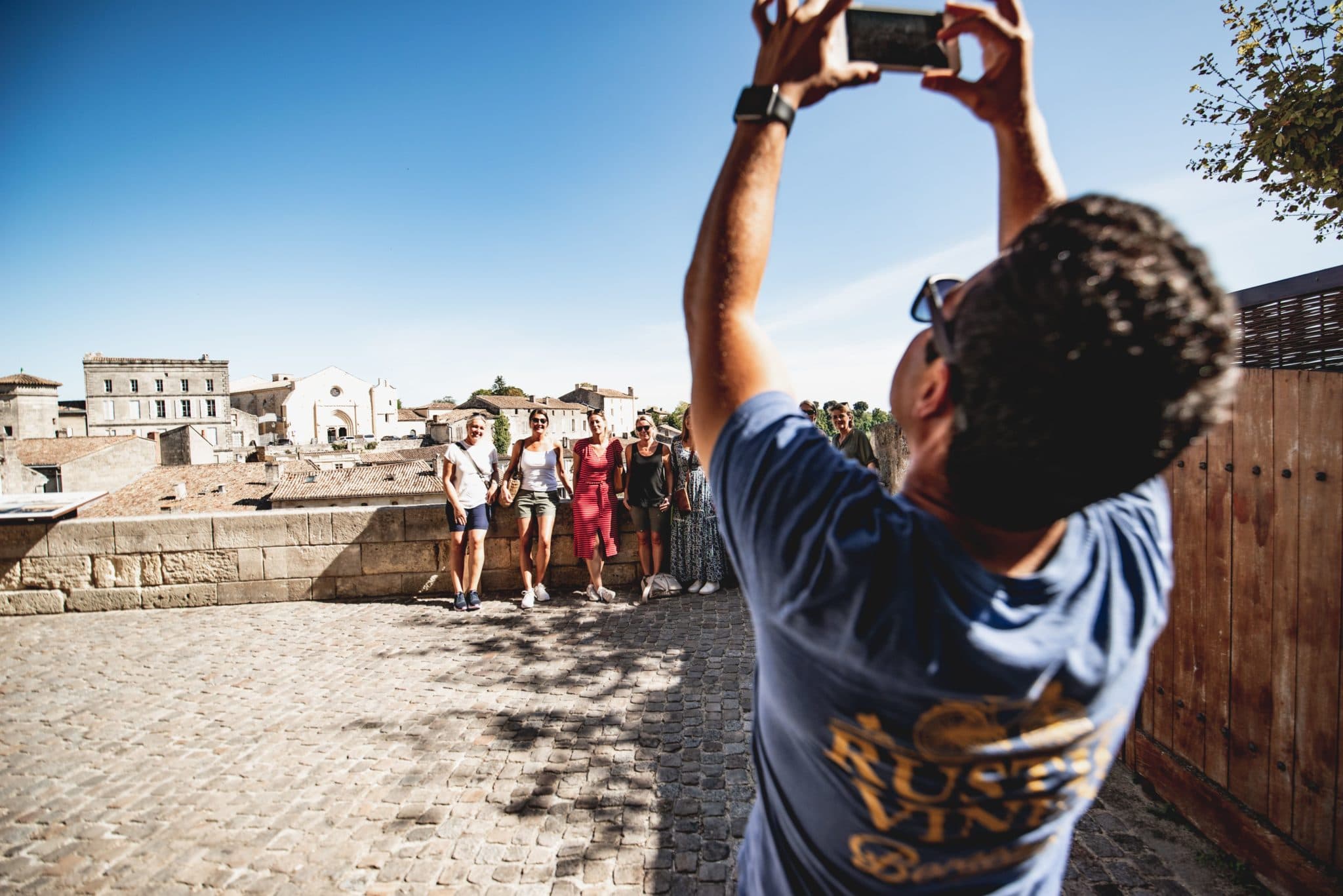
Our local guides take visitors beyond the tasting room, sharing the stories behind each vineyard, introducing passionate winemakers, and explaining how every season shapes the wines you’ll enjoy years later.
If you’re planning your trip, explore our experiences:
- 🍷 \Explore all Bordeaux Wine Tours\
- 🚴 \Saint-Émilion Electric Bike Tour\
- 🍇 \Médoc Wine Tour\
Looking for more inspiration? Visit the \Rustic Vines Blog\ for travel tips, wine guides, and seasonal updates from Bordeaux.
Frequently Asked Questions
What does véraison mean?
Véraison is the stage when grapes begin ripening, changing colour and developing the sugars, aromas, and tannins that will determine the final wine.
Can visitors see véraison in Bordeaux?
Yes. Late July and early August are among the best times to observe véraison throughout Bordeaux’s vineyards.
Does early véraison mean an early harvest?
Not always. Weather conditions during the final weeks before harvest still determine when grapes reach optimal maturity.
Why is véraison happening earlier?
Climate change has accelerated the vine’s annual cycle, with warmer temperatures leading to earlier budburst, flowering, and véraison.
References
- \International Organisation of Vine and Wine (OIV)\
- \Conseil Interprofessionnel du Vin de Bordeaux (CIVB)\
- \INRAE – French National Research Institute for Agriculture, Food and Environment\
- \Météo-France\